It’s been quite a while since my last article. We all have our compulsions, I suppose. Mine is that I loathe publishing an article until I have essentially completed my work on the subject at hand. Also, despite generally working on several threads of the project at once, I prefer to publish articles along one thread of work before starting articles on the next. Unfortunately, this has led to long gaps in publishing articles, so I’m going to have to get over it! But for now, there is a lot to talk about, and something very fun to share…
The Opportunity of a Lifetime…
A while back, I posted an article about the “The Backhanded but Exhilarating Power of Mortality”, and the importance of getting on with whatever is important to you, if you can. And so, through the grace of friends, Mary and I have temporarily left our world in Colorado behind, and moved to England for a research sabbatical.
We decided to forgo getting a car and instead brought our bikes with us–after refitting them with gravel tires and paneer racks to allow us to make longer rides, and over more “interesting” terrain!
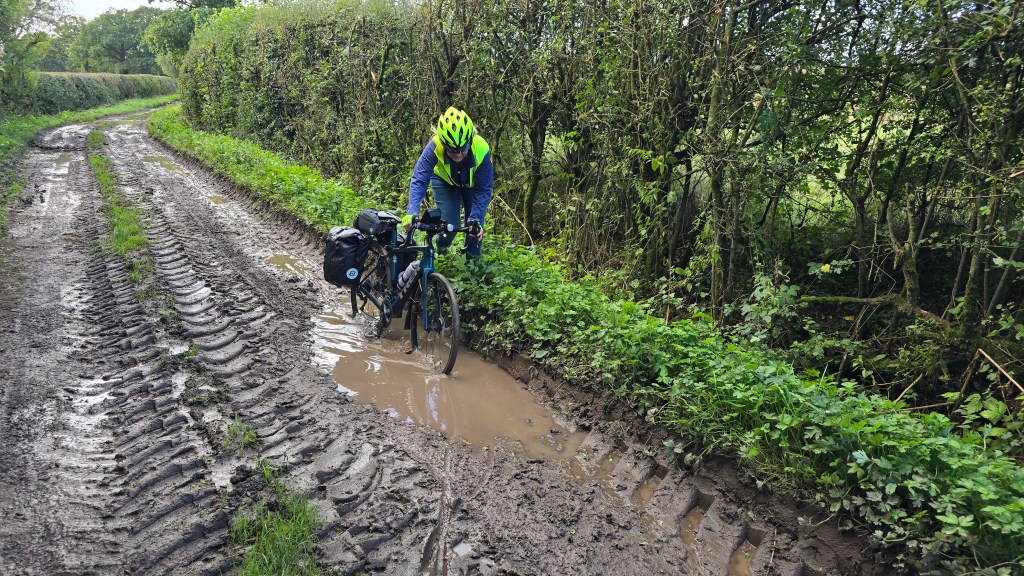
In addition to being our everyday “wheels” while in Uxbridge and London, these bikes have allowed us to make our way to more remote historic sites of interest (including all of the historically noted stops along the northern portion of the 625 mile Monarch’s Way”, from Worcester to Wolverhampton).
We have filled our calendar during the few months we have been here so far, visiting historic homes and numerous sites. We have a growing trove of images and information we never could have gotten from Colorado. Of course, we have also been meeting many interesting people and visiting countless wonderful old pubs along the way!
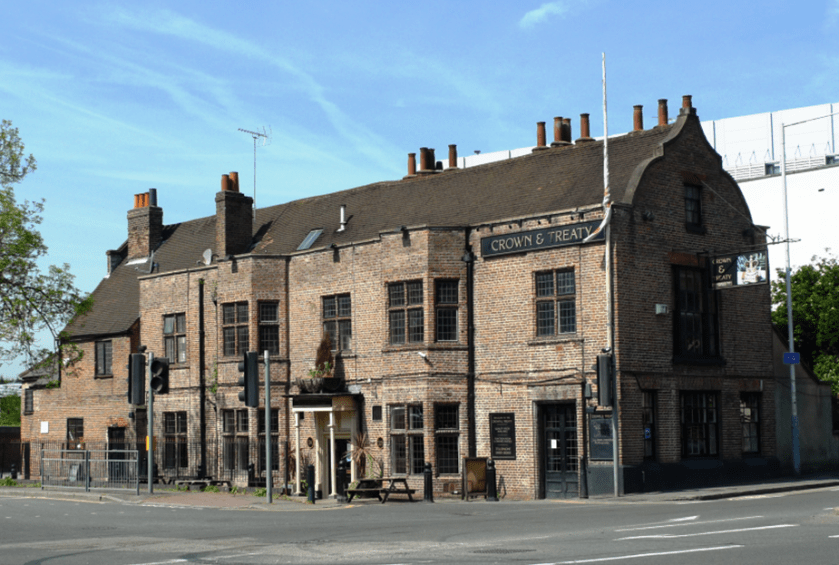
Which brings me around the update I’d like to share about my favorite old pub (and most recent obsession), the “Crown and Treaty”, here in Uxbridge.
The 3D Reconstruction of the Ancient Treaty House
During our 2023 visit to Uxbridge, we learned that my layout model of the original Treaty House was flawed. But there was an important reason I had rejected the layout that we found evidence supporting. Using more exact measurements and photographs daken during that visit, I was able to work my way through the problem, ultimately making the breakthrough I needed (see “The Mysteries at the Far End of the Uxbridge Treaty House“). Then, it was time to get on with creating the updated reconstruction model of the original, intact Treaty House. But this time, I decided to “up my game” in terms of the tools I’m using. It was time to learn how to use a 3D CAD program so I can do this job right! In all, it’s been quite an investment of time, but has already paid off in unexpected ways.
One of the challenges has been that it is impossible to inspect much of the ground floor of the building’s “chimney” wall because there are multiple modern structures in place that prevent access to the original walls behind them. Using the 3D model as a research tool, I have been able able to correlate what can be measured outside with interior features to refine where things must lie in relation to one another. Of course, being able to enjoy a pint and work my way through the Crown and Treaty’s wonderful new menu while I’m there has just been a bonus!
The focus of this first phase of the 3D model development has been to obtain an image from the model as a linework reference enabling a really compelling artwork. But completing the model meant resolving a set of around a half dozen lingering minor architectural questions I’d been procrastinating about before we got here. Living in Uxbridge has allowed me to ride to the Crown and Treaty to take photos of specific details or make additional measurements as needed.
In addition to poring over such things at the Crown and Treaty as brick composition, brickwork patterns and apparent age of mortar, we have also spent time making site visits to see other surviving examples of architecture from the same period. We even did some historical “crowdsourcing” by consulting with a small group of interested folks at a recent Uxbridge History Society meeting. They were able to provide a critical review of the work (and my assumptions), but they also pointed me to several additional local sites where I found examples of specific construction details that helped me close out the last lingering details for the model. None of this would have been possible from Colorado. In the end, the model was much improved for the effort.
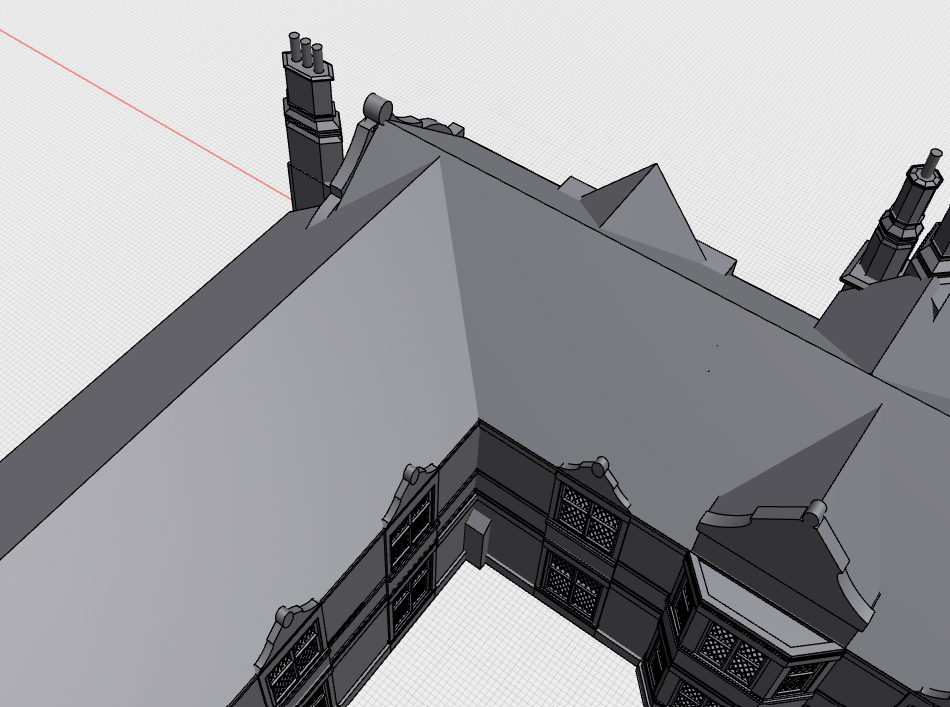
So I’d like to share the following images from the 3D model. Please bear in mind that there are a few visible “artifacts” in the walls of the model that are simply joints in the geometric shapes those 3D walls are constructed from. Also, there are a few bits yet to be completed (for example, the central door isn’t “installed” yet). Now that the artist has what she needs, I will move on to building up a 3D model of the interior of at least the center span where the treaty negotiations were held.
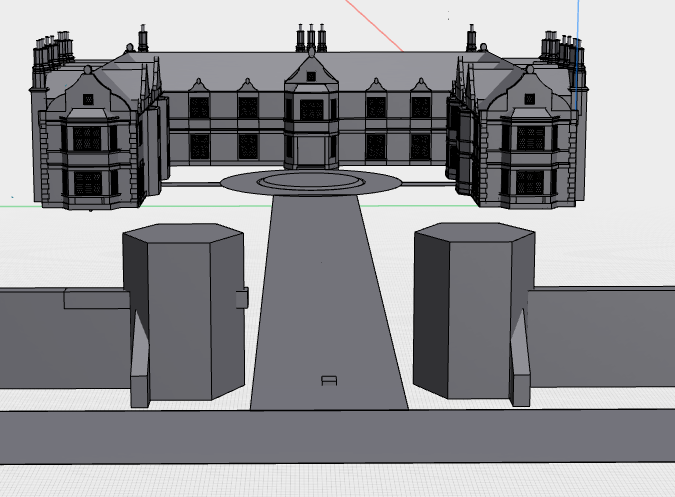
Like the majority of the original Treaty House (and the old Oxford road), the iconic twin hexagonal gatehouses visible in the image above no longer exist. As I have time, I will be finishing out the gatehouses in the model also. Fortunately, (unlike the main part of the original house), there are surviving historic woodcut images of these gatehouses to work from!
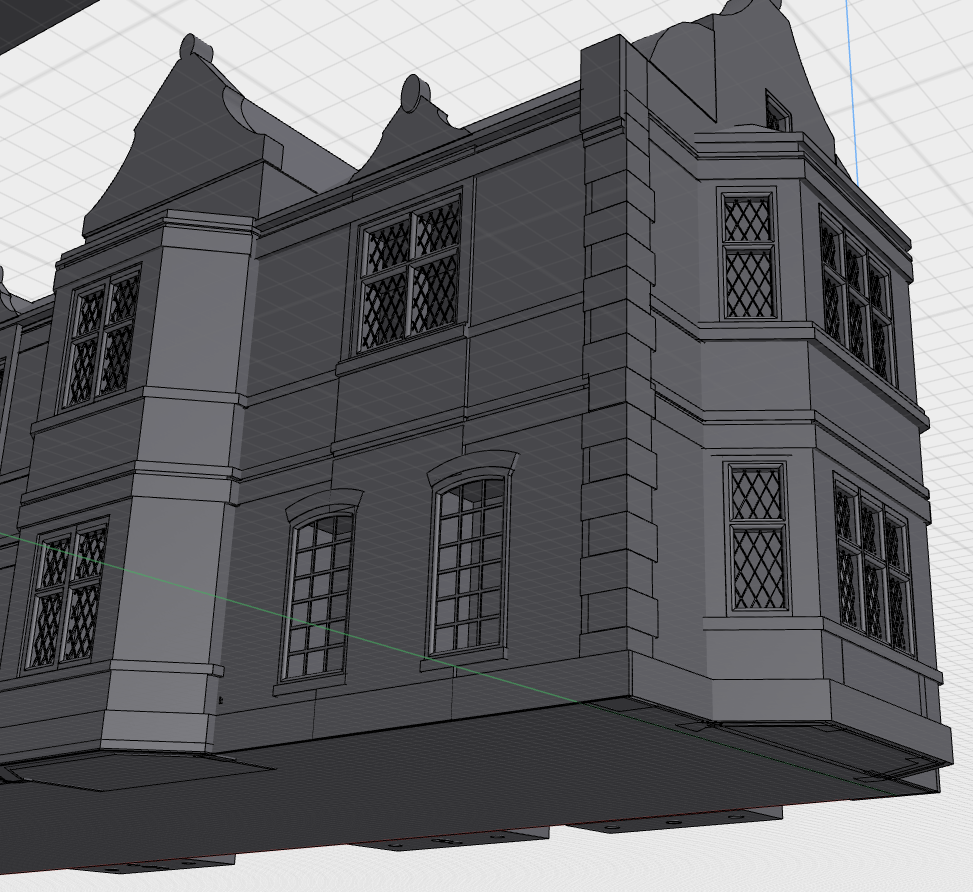
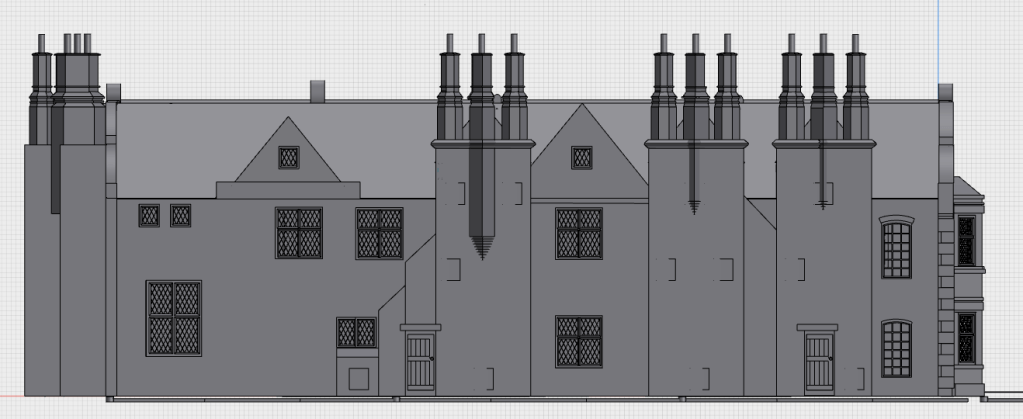
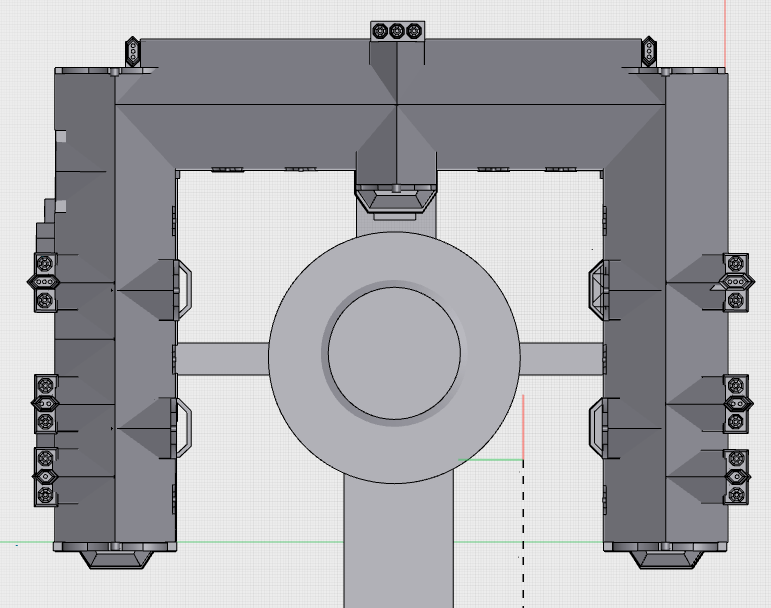
This 3D model reflects the state of the building at the time of the treaty negotiations in 1645. Recall that at that time, the house was already more than 100 years old. This era was likely the property’s “season of splendor”, having undergone significant investment and upgrades only a few decades before. But as the decades of the next century passed, the grand property passed into less affluent hands, and began its slow descent into neglect and the parceling off of its grounds.
Looking Ahead to a Special Celebration
We are working with the new owner of the Crown and Treaty to plan a celebration event that will feature the unveiling of the updated artwork during the 380th anniversary of the historic talks this coming February. Its going to involve some additional work on my part, but should be a lot of fun! It may even involve some interesting VIPs (stay tuned). In the mean time, I have many other things to attend to for my larger project while I’m here in the UK.

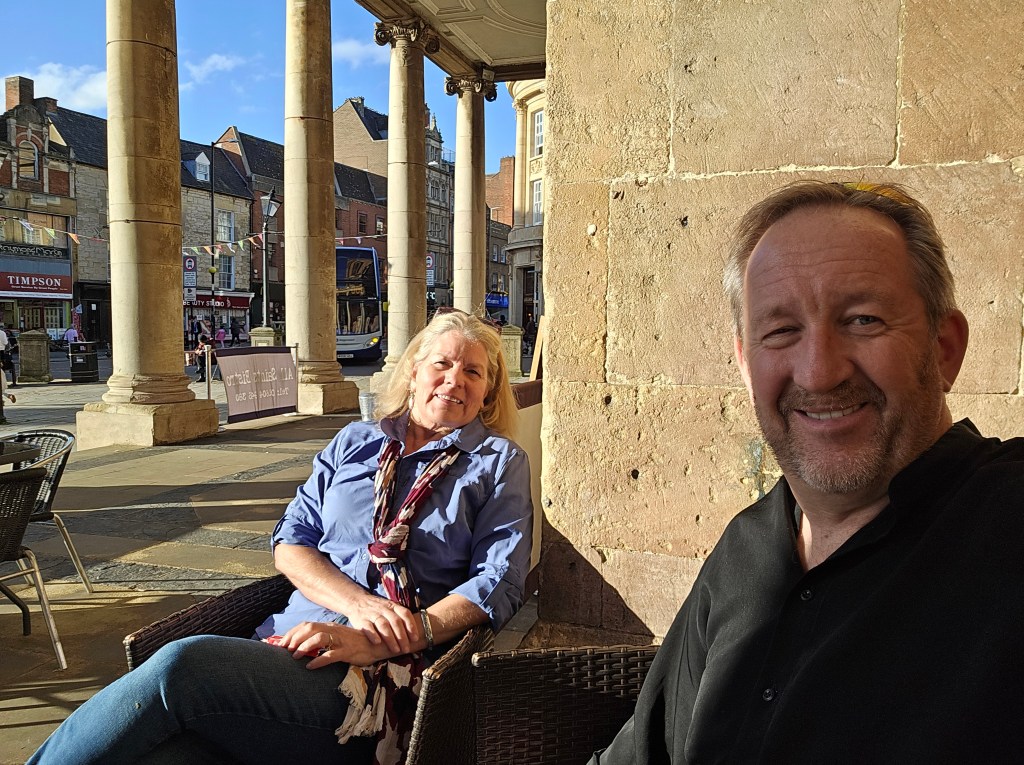
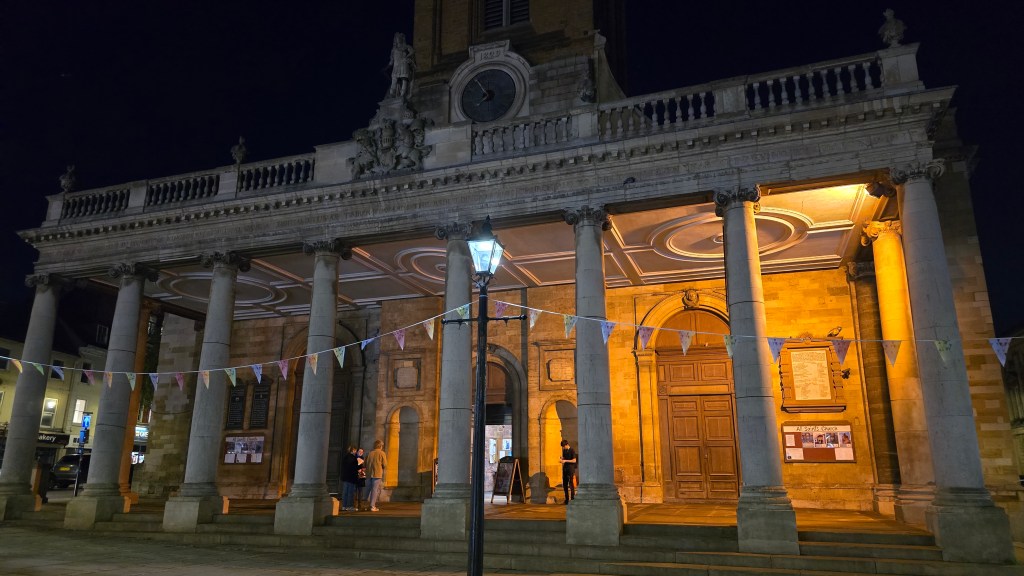
Mary and I were on a visit to Northampton last week for an event called the “Sherriff’s High Service”. Northampton was Sir Richard Lane’s hometown, and is where his wife, Margaret, and most of their children are buried. For reference, modern Northampton has a population of around 775,000 people–that’s nearly half again the population of the entire state of Wyoming, where I grew up.
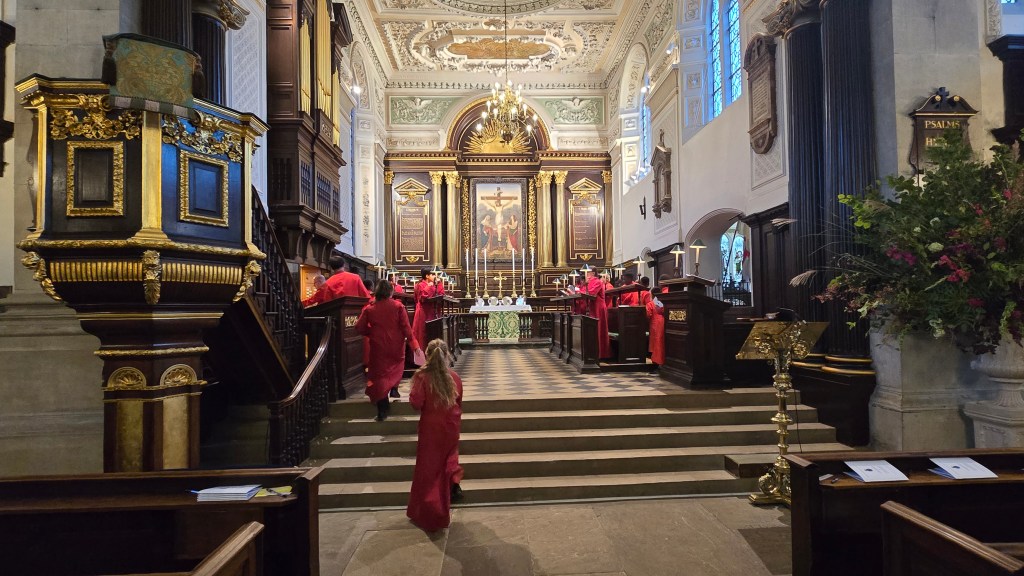
This service is an annual event of the modern judicial and clerical leadership of the city. It was being held in All Saints church, which was the church of Richard Lane’s young family 400 years ago.
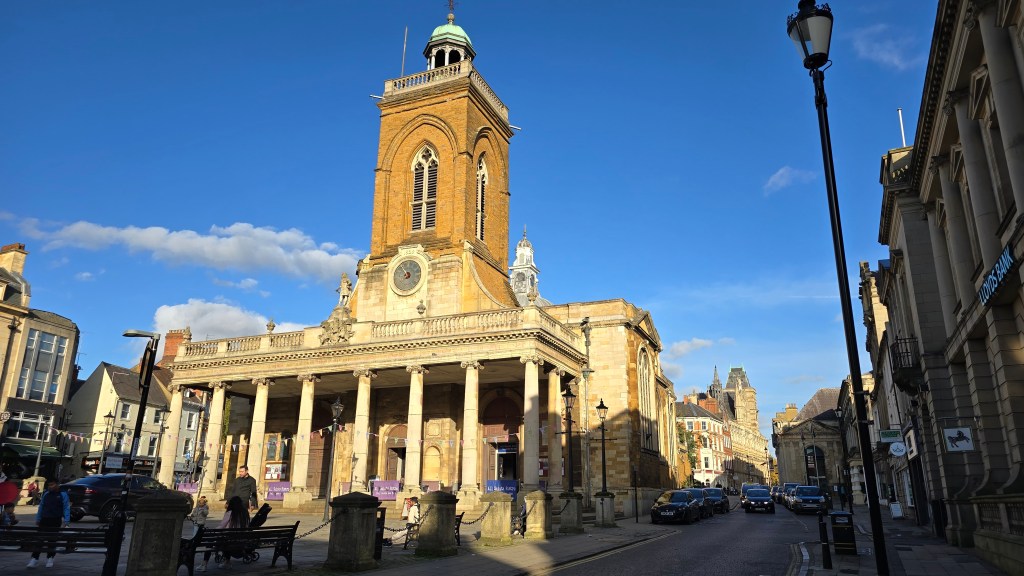
This service was a special and inspiring event. Leaders at least six major faiths were present, and each had a role in the service. There was a delightful bit of pageantry involved, as those participating were dressed in the colorful and elegant historic attire of their respective offices, and arrived in a formal procession. But for me, the high point was the comments from the High Sherriff herself, Amy Crawfurd.
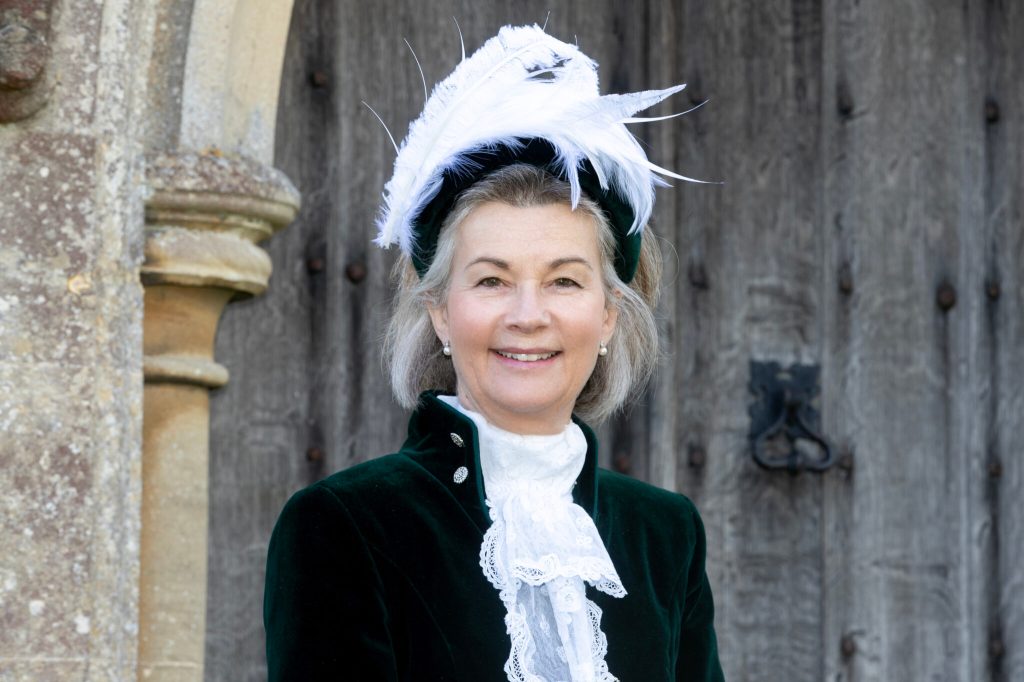
She spoke about the importance for all of the attending dignitaries of the judicial and clerical leadership of Northampton to rededicate themselves to administering justice and governance with mercy, wisdom and integrity. To American ears, heavy with the daily debasement of a once proud legacy by a growing number of our current crop of leaders, this was refreshing and inspiring. It made me proud for Northampton, and grateful we were able to attend.


 5280 Explorer
Leave a reply to Mark Cancel reply