I’ve been asked why I’ve spent so much time working to reconstruct the Original Uxbridge Treaty House. What’s most remarkable about this particular chapter of my life is that it started almost whimsically. Mary and I were on a brief but busy trip to the UK to give a report of findings to the Curator of the Parliamentary Art Collection at Westminster. Our flight had just arrived early at Heathrow, and I realized we had an unplanned hour before we needed to make our way to our first appointment with the Queen’s collection at Windsor Castle.
I knew of a building not too far out of our way in a town called Uxbridge where a building known as the “Treaty House” was located. This building was where the 1645 Peace Treaty Negotiations had been held. At these talks, Sir Richard Lane was a commissioner negotiating on behalf of King Charles I in an attempt to end the English Civil War. I thought it would be interesting for Mary and I to share a pint of Ale in a place where Richard Lane had once walked… I was curious!
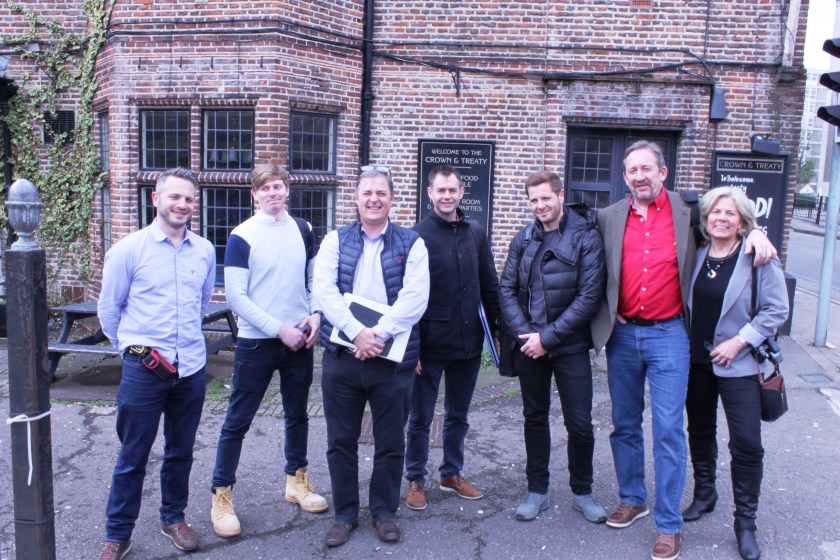
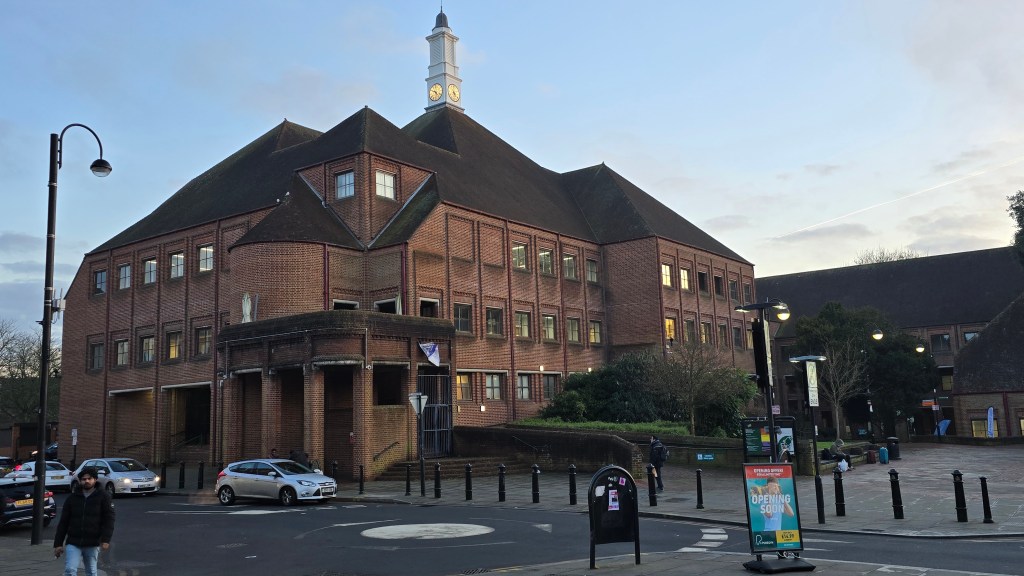
When we arrived though, the neglected building was deserted and locked. The “Crown and Treaty Pub” was not a thriving business, and we had caught it between owners. Eventually, as we were taking pictures all around the fascinating building, a small group arrived that were associated with the new owner. But the key to unlock the building they were hoping for never showed up, and it was soon our time to leave.
As we left, I had no intention of starting a new project involving the Treaty House. But studying the building and its history from afar gave me a unique perspective and insights. I was forced to examine what I could find online very closely. I was forced to imagine how the building was laid out inside (since it hadn’t been possible for us to enter the building). It was left to me to wonder what to make of old photos of a “Presence Chamber” and a modern reference to a “Treaty Room” set against oddly vague hints that the negotiations may have been held in part of the building that no longer exists. The mystery had me lightly hooked, and I pressed on.
The most critical early insight was the implications of the phalanx of chimney flues across the back of the building. Since a fireplace would have been needed in every inhabited space in the building, the number of flues and their arrangement across the back of the building was significant. It meant that most of interior space of the surviving building (on every floor) had been carved into many rooms. This left little chance of a room large enough to have hosted the dozens of negotiators who participated in the treaty negotiations.
By this time, I had extracted rough dimensions of the building from satellite imagery, and had begun drafting speculative interior arrangements in the first of my models of the Treaty House.
I began studying the various images of the Treaty House that were available online–photographs dating back to the later 1800’s and drawings and artworks before that. I began comparing them, sorting them, noting the many changes in the structure over time. I began specifically looking for any of them that showed the intact original structure–before a significant portion of it had been “taken down”. I was still curious to understand to what extent Sir Richard Lane might have once walked in the surviving structure.
Its probably good that I had already invested quite a bit of time into the project before some of the larger truths of the Treaty House emerged. Had I understood earlier what would only become clear later, I might have set the inquiry aside.
Eventually, I would determine that none of the available images were of the original building–all were of the surviving “wing”, starting decades after the rest of the building was no more. Eventually, I would determine that the chamber the negotiations had been held in had been part of a central span of the building that no longer existed. Eventually, I would realize that the surviving wing had been assigned to the Parliamentary side of the negotiations. Thus, it dawned on me that this meant royalist commissioner Sir Richard Lane had never set foot in the surviving wing.
But having already immersed myself in (and ultimately dismissed) two hypothetical models of the original treaty house, I knew I didn’t have the answer, but it seemed something important was only just out of reach…
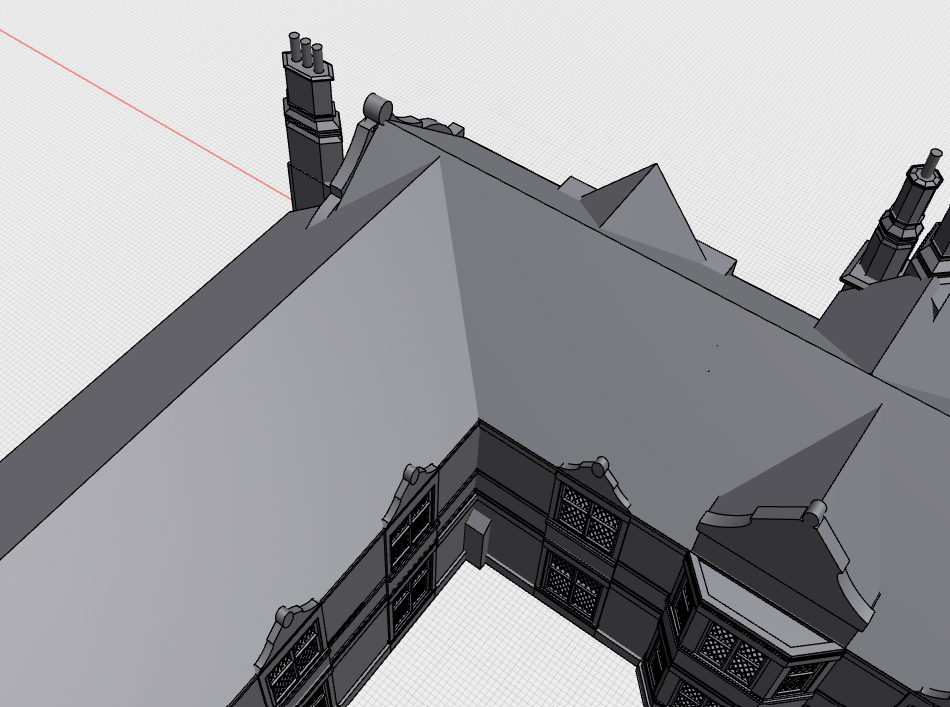
The dam broke one day while I was grousing to Mary about how a large swath of concrete shoring had left “…ugly scars on an otherwise lovely building”. Two beats behind these words I was struck by a sensation akin to a flashbulb going off in my head. A scar? Like the scar over a major wound? What if that concrete patch was the shape of a scar left from the amputation of the central span of the original building? At first, I didn’t see how it could be, but having exhausted every other possibility, I started taking the idea out for a test drive. It wasn’t long before it occurred to me that oddly specific shape of that concrete scar might have been the shape of the roof slope of the original center span protruding through that clearly original endwall of the surviving wing. I began sketching and possibilities. To my surprise, this new possibility was holding up.
It wasn’t long before I had reached the limits of the tools I had. I knew a real 3D model would be needed to prove out my new theory. I couldn’t find anyone with the tools and skills needed, so I eventually decided I would have to take it on myself. First, I had to research available 3D software packages to find one that was suitable for the task. I needed one that was intuitive enough for an amateur like me to use it without going mad.
I avoided the simpler home design tools on the market because I felt only a professional tool would give me the control I needed to construct very specific design elements. Thankfully, I chose well. The Shapr3D tool turned out to be both intuitive and capable. It allowed me to make progress while stumbling my way towards competence in using it. Bit by bit, I learned how to use its many features. Over time, and after starting over only a few times, the basic model I needed emerged.
And that model confirmed my theory:
If the center span and wings were all of the same structure depth (front wall to back wall “thickness”), and the same wall height, and the same roof pitch, then the geometry of the center span’s roof should cause the back plane of that roof to protrude through the endwall exactly where the concrete shoring appears on that endwall….and it did!
The second part of my theory was in regards to a large but oddly hidden internal structure that is most apparent in how the building’s internal arrangements are built around it. This massive multi-floor, 3 foot by (roughly) 8 foot structure lies within the existing building, perpendicular to that same endwall, and lines up with a rectangular portion of the concrete patch not explained by the protruding roof pitch. I believe this hulking but hidden structure was an internal chimney that hosted fireplaces in the part of the building where the wing and the center span intersected.
A recently found architectural drawing of the building proposing expansions in the 1802 remodel confirmed the existence of this structure, and showed fireplaces in its base. That drawing also confirmed the full staircase I insisted had once occupied the space behind it–a space that now houses the pub’s kitchen.
I wondered why this inconvenient internal structure would have been retained when the wing was salvaged. I think there are two reasonable possibilities: First, the original fireplaces may have still been needed. If this is the case, the flues were not clearly visible, as the original turrets that might have been atop this chimney structure seem to have also been lost when the center span was taken down. More likely is that this large structure was seen as a critical structural support for this end of the building, and so it was retained and “worked around”.
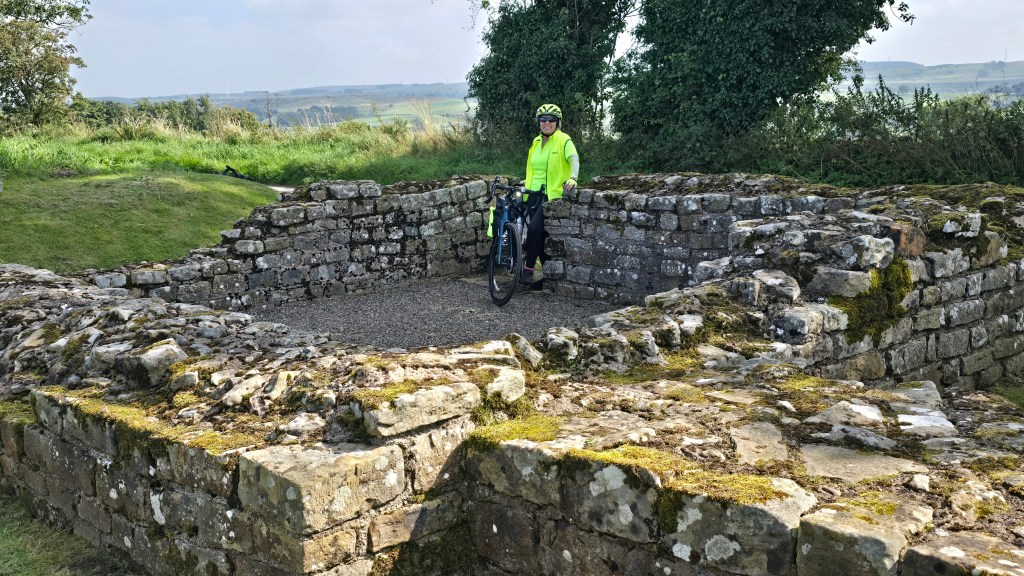
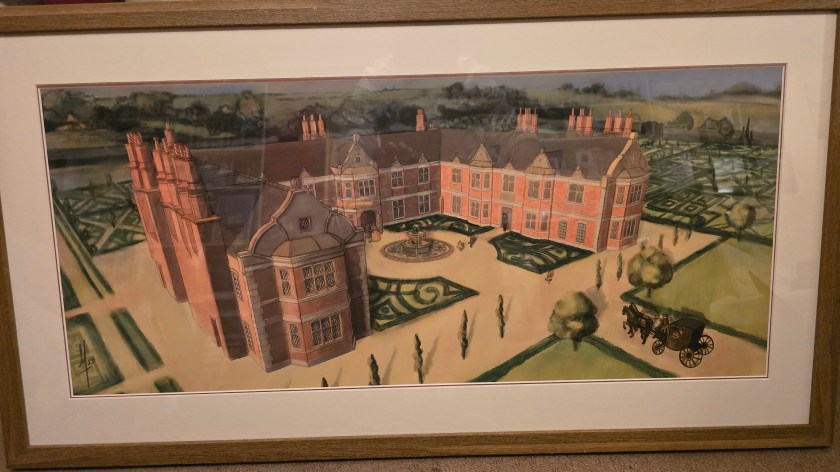
The model had served its first, most important purpose, and further analysis showed that “disturbances” in the brickwork on that end of the building correlated perfectly with this newly theorized intersection of the original center span. I realized the 3D model could also help with another key goal of this trip–to create an updated artwork of the reconstructed Treaty House. With additional detailing in the model, I knew this tool could provide very accurate perspective line drawing for the new artwork. Since I’d found our artist at the end of our bike ride across Hadrian’s Wall in late summer, it was time to get on with it! A month later, she had the linework she needed.
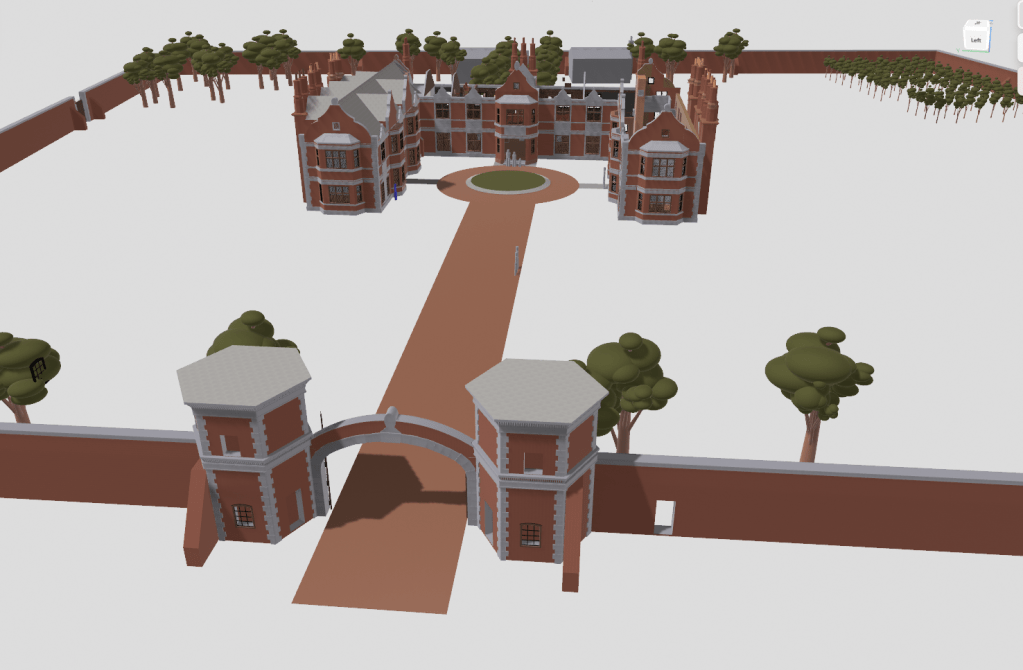
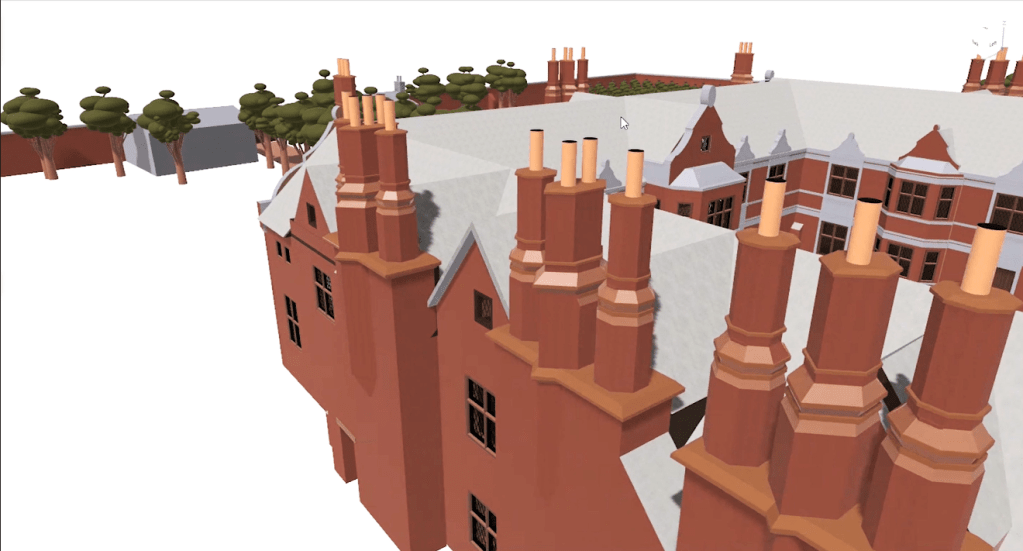
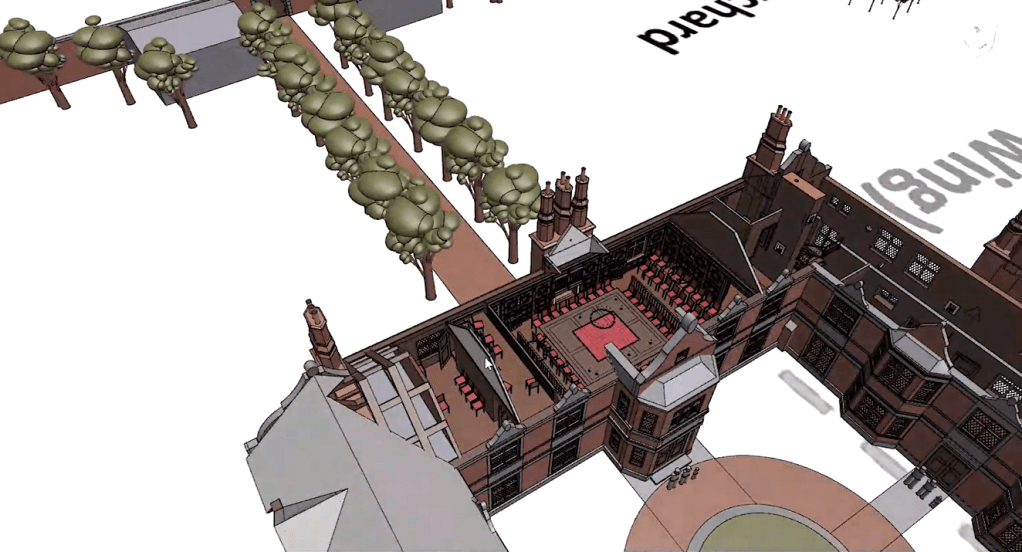
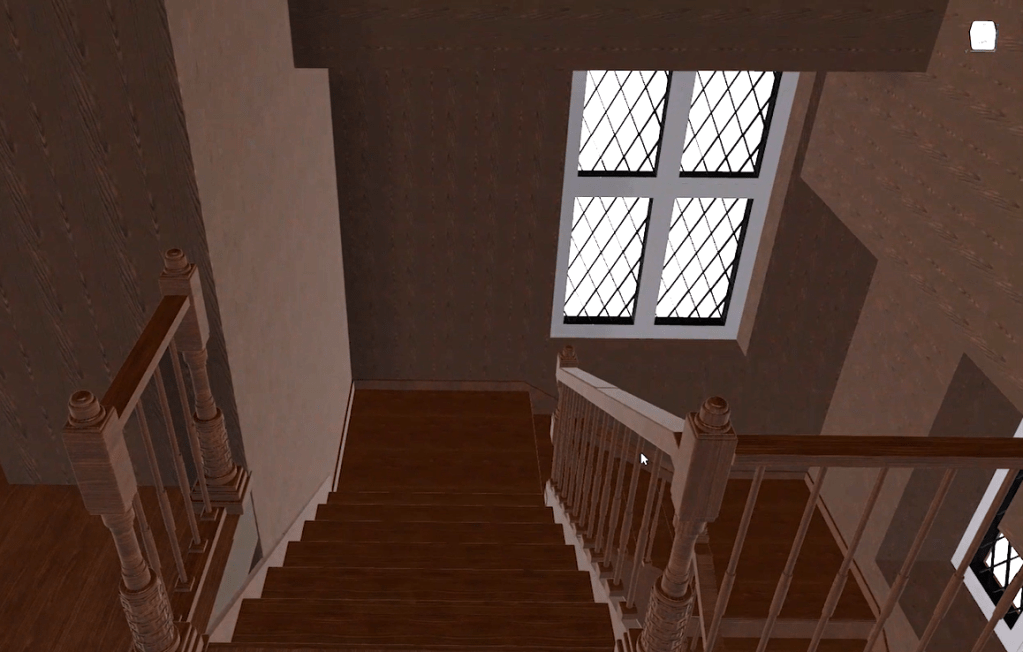
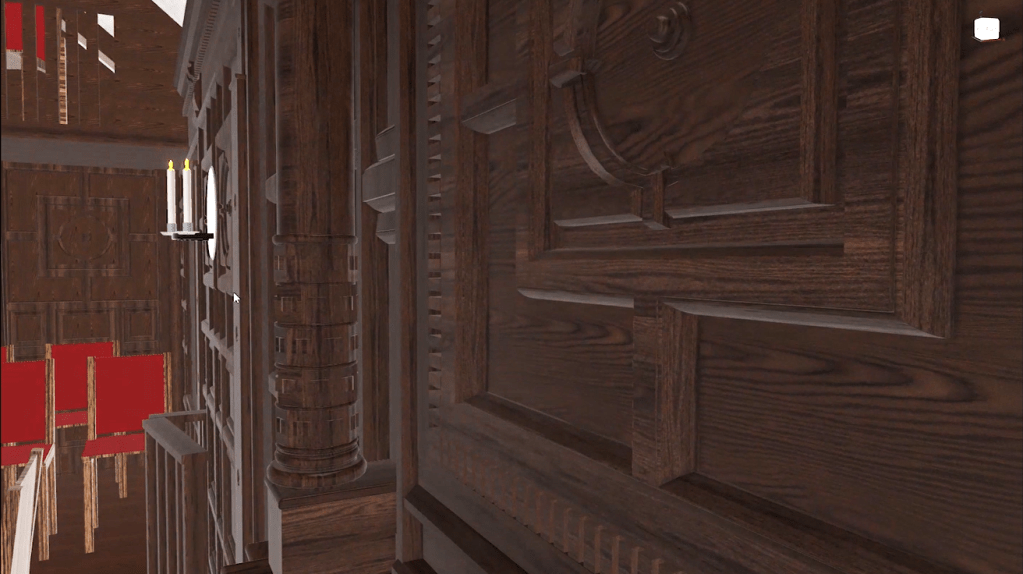
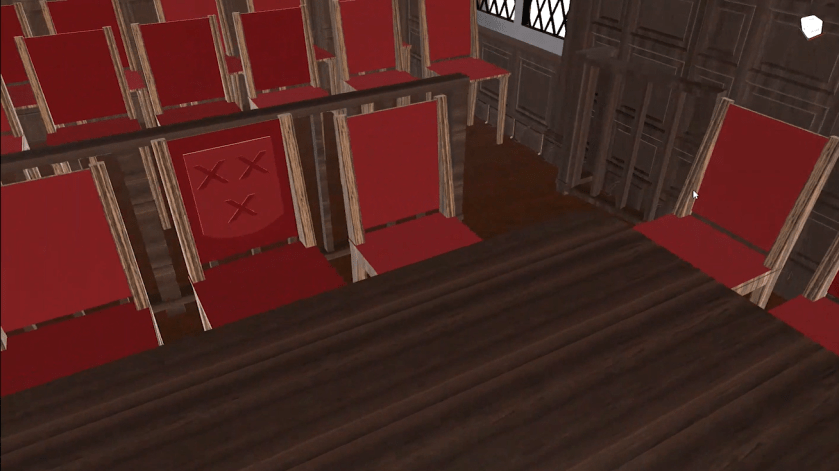
It was clear I could also use the 3D model to produce some high quality documentation images as well. But another, more exotic possibility began pulling at me: what if I could use the 3D model to produce a video “tour” of that original, long lost building? Althought this would mean a great deal of additional work, the impact of enabling the public to experience the scale and splendor of this beautiful but lost site through a video “fly through” could be nothing short of transformative.
You see, along the way, I had fallen in love with this lovely but unlikely survivor of a building. I once described the Treaty House as that proud, determined “woman of a certain age” who now lives in a world that has long forgotten she was once the shining diva that owned that end of town!
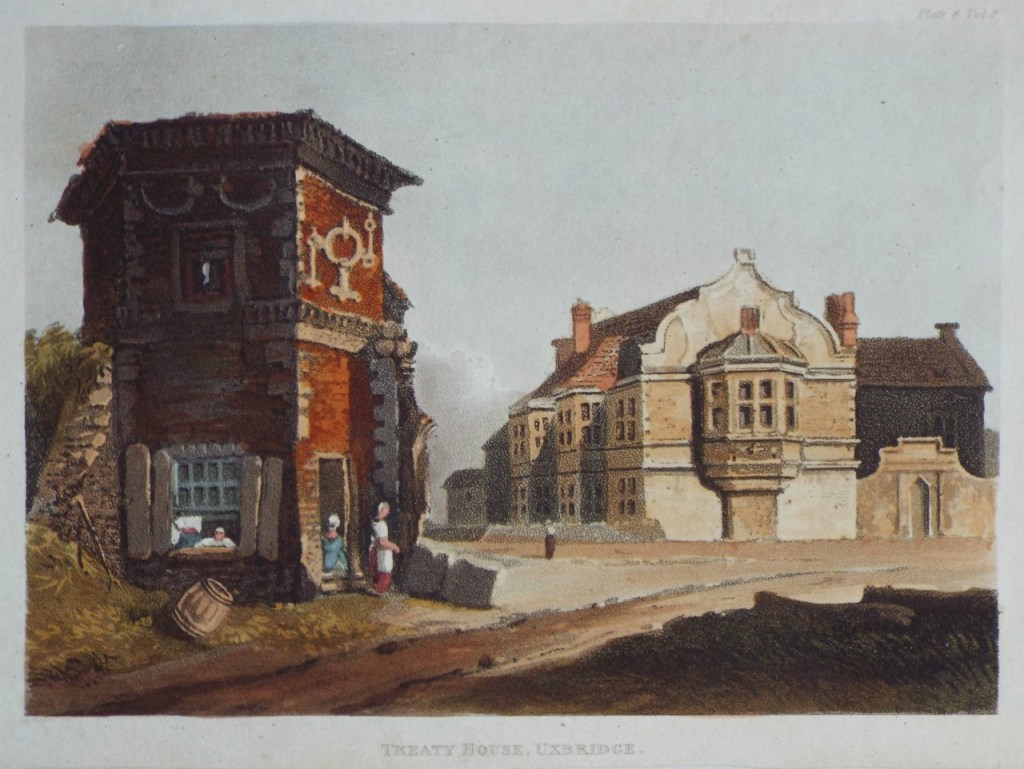
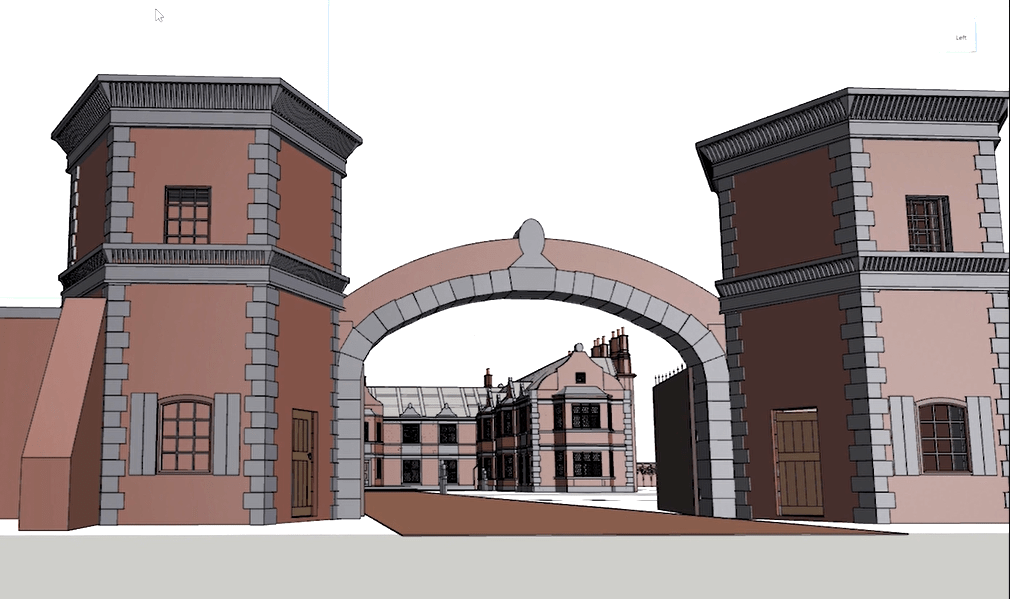
However, this particular choice had consequences. It would be a tremendous amount of work. It would also require additional research to settle a legion of minor points that were otherwise unimportant. Because they would show up in the video, they were worth getting right. So, I began cutting down my list of places we wanted to visit while we were in the UK. Much of my free time in the second half of our visit would have to be committed to the 3D model.
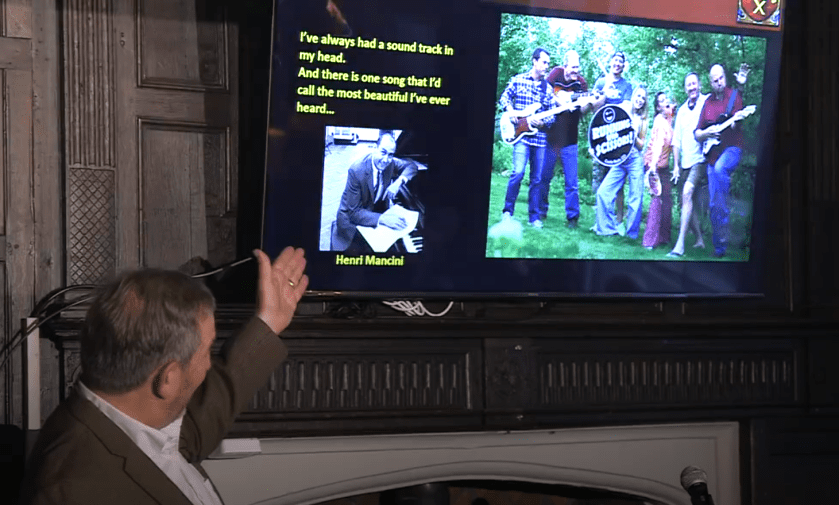
I also realized that creating an emotional experience of this lovely but largely lost historic site would require an appropriate soundtrack. For this, soon realized only one choice–a song that has haunted me from the moment I first heard it nearly 50 years ago. This was a piece of music I first heard when I was a 12-year old in a small town in Wyoming, glued to the Olympics on TV. I was floored by the Olympic performance of a girl from Romania who had astonished the world with the first perfect scores in gymnastics–Nadia Comaneci.
I consider Henri Mancini’s performance of “Nadia’s Theme” to be the most beautiful pieces of music I have ever heard. Even today, I can’t hear it’s swelling cello without feeling choked up. Like the Original Uxbridge Treaty House itself, this music is a largely forgotten masterpiece. I determined to put them together to the best effect my amateur’s tools and skills would allow. The result is not the unarguable magic of a Pixar Studios production, but its the best I could manage.
After months of work on the 3D model, it had grown to encompass a square half-kilometer of the land between the River Colne and the Frays stream. The model contained over 20,000 design elements and had become sluggish under the computing burden of this extensive model. Three days before the unveiling event, I finally declared it done!
Tired but working steadily, I spent the next two days extracting video clips from the model and arranging them into a video that flowed well with the music track. I finished that video late the night before the event.
I had put all my eggs in one bold basket, and had no “plan B”. When I awoke the next morning, I had only a few hours to put together my actual presentation for the event. But I wasn’t worried. I had materials from earlier talks to draw on. And my only purpose for that presentation was to set the stage for the video fly-through I had created. And it came together!
Rather than lead the audience through a typical academic presentation, I only needed to present what was necessary for the audience them to fully appreciate the 4 minutes of video that had taken months of effort to produce. That video was the “magic carpet” created to take them on an emotional experience of a place unknown for nearly 300 years…
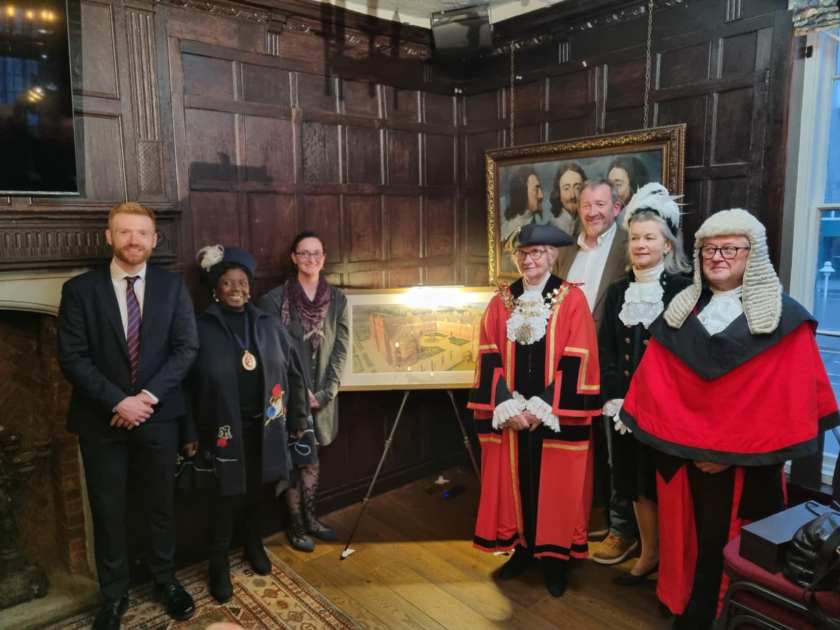
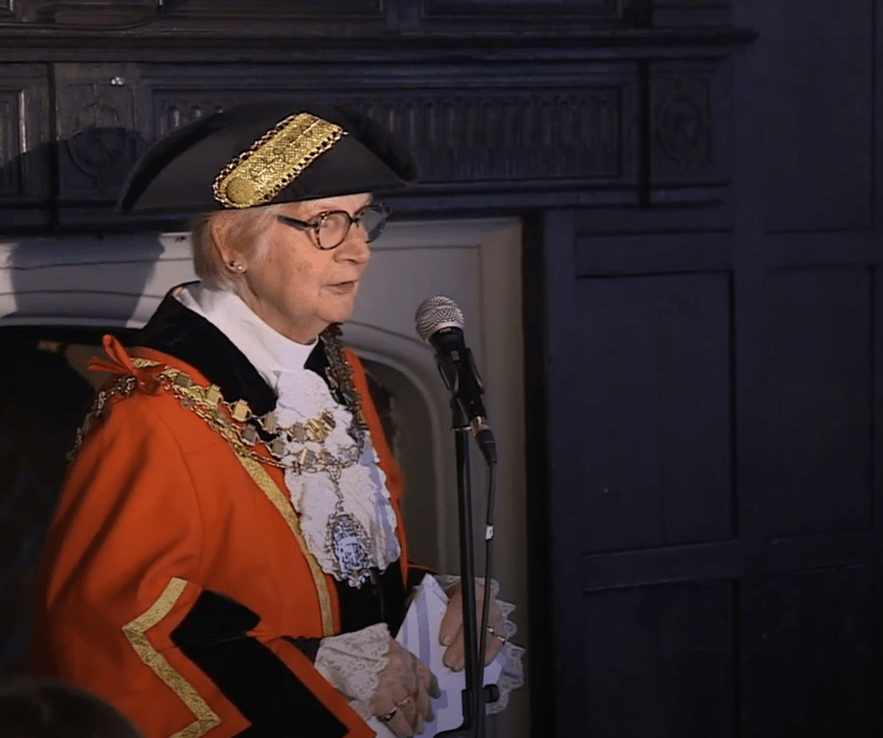
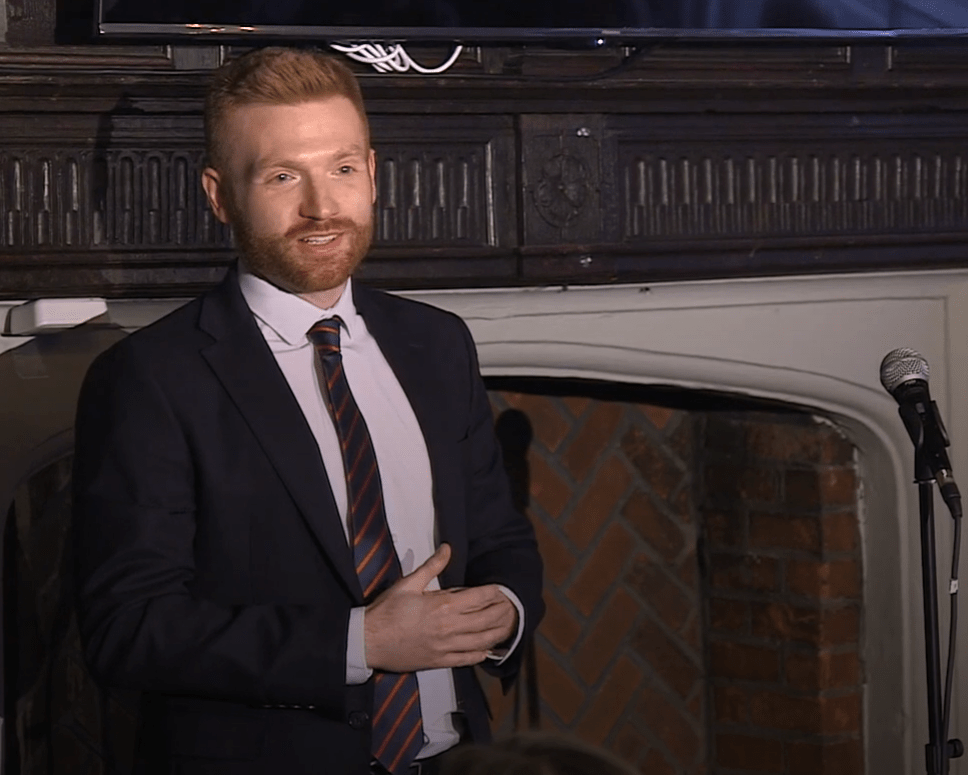
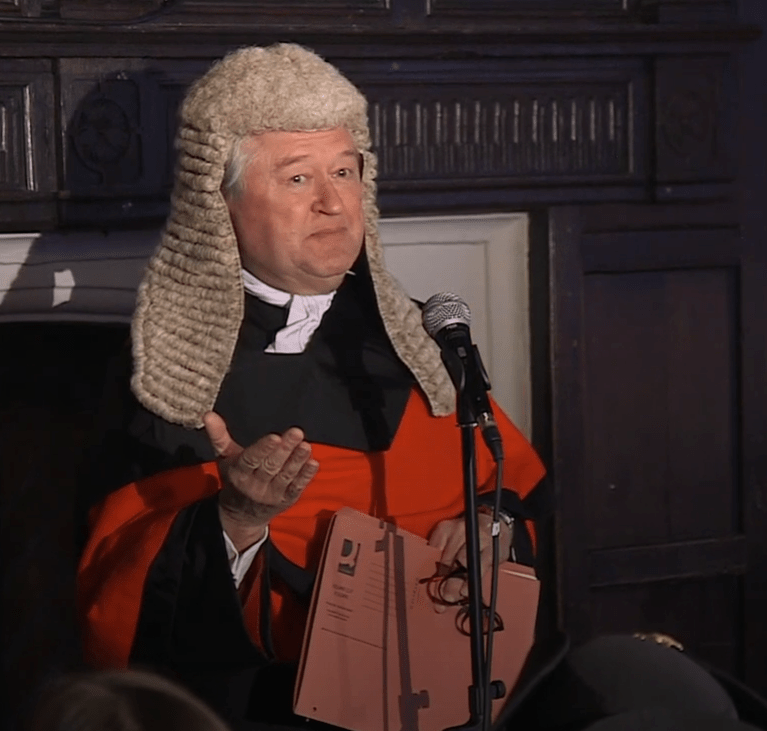
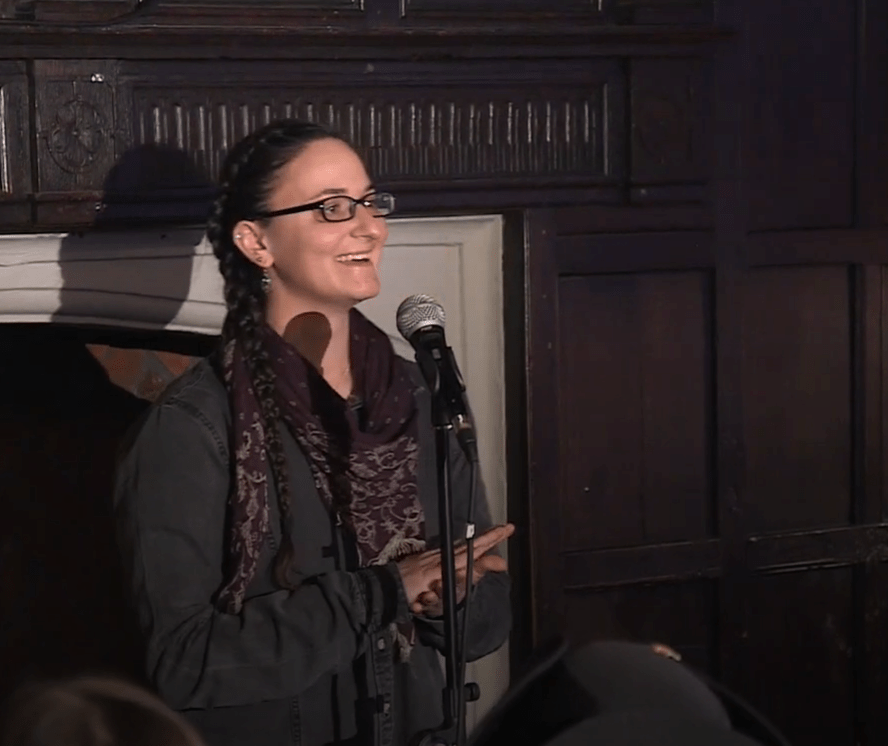
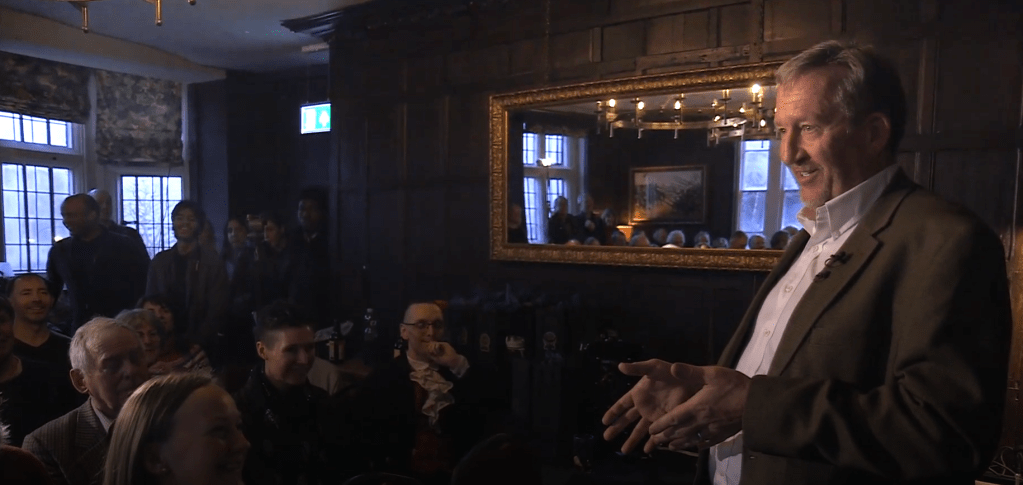
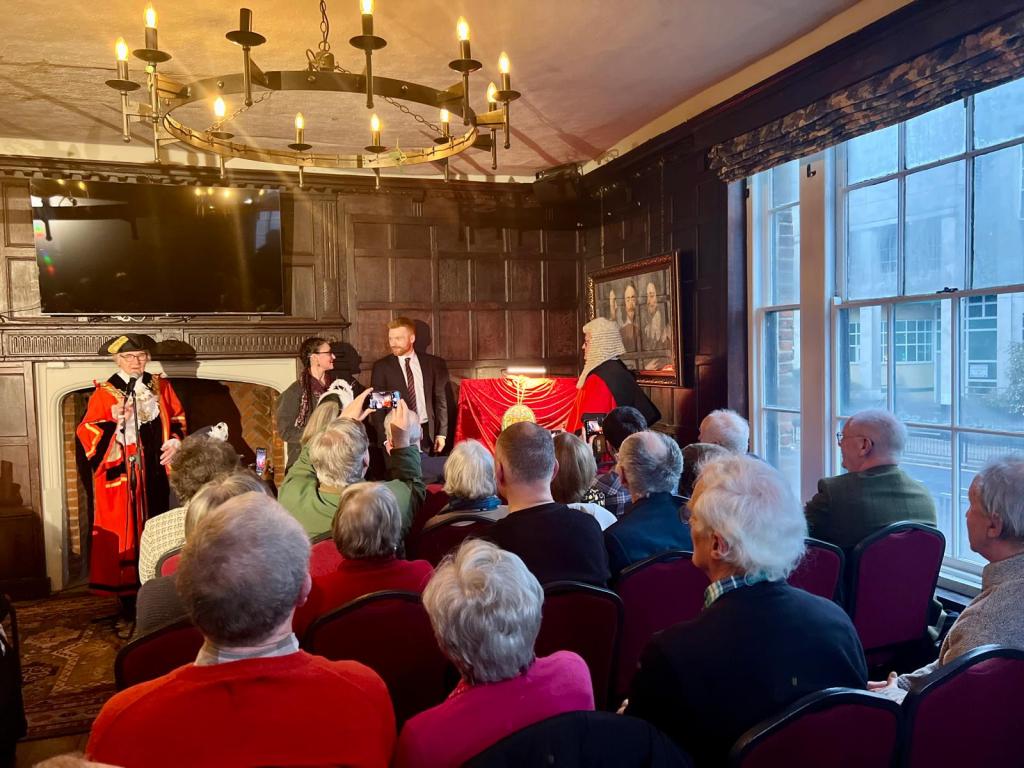
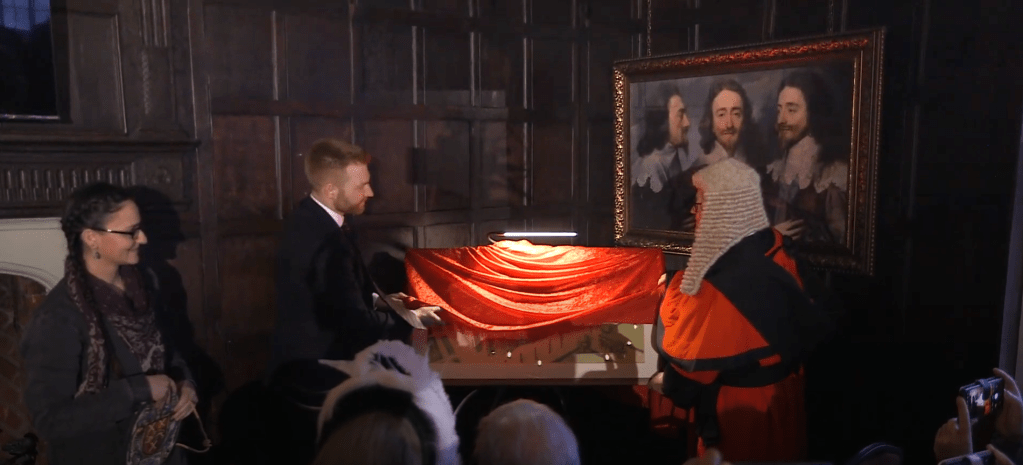
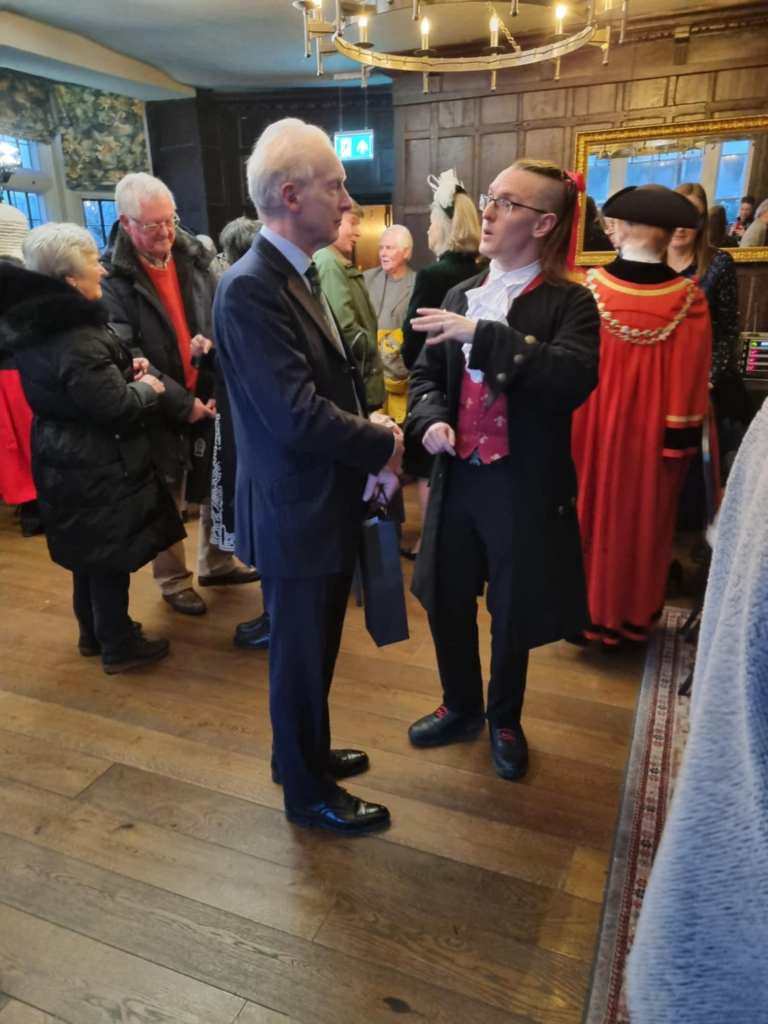
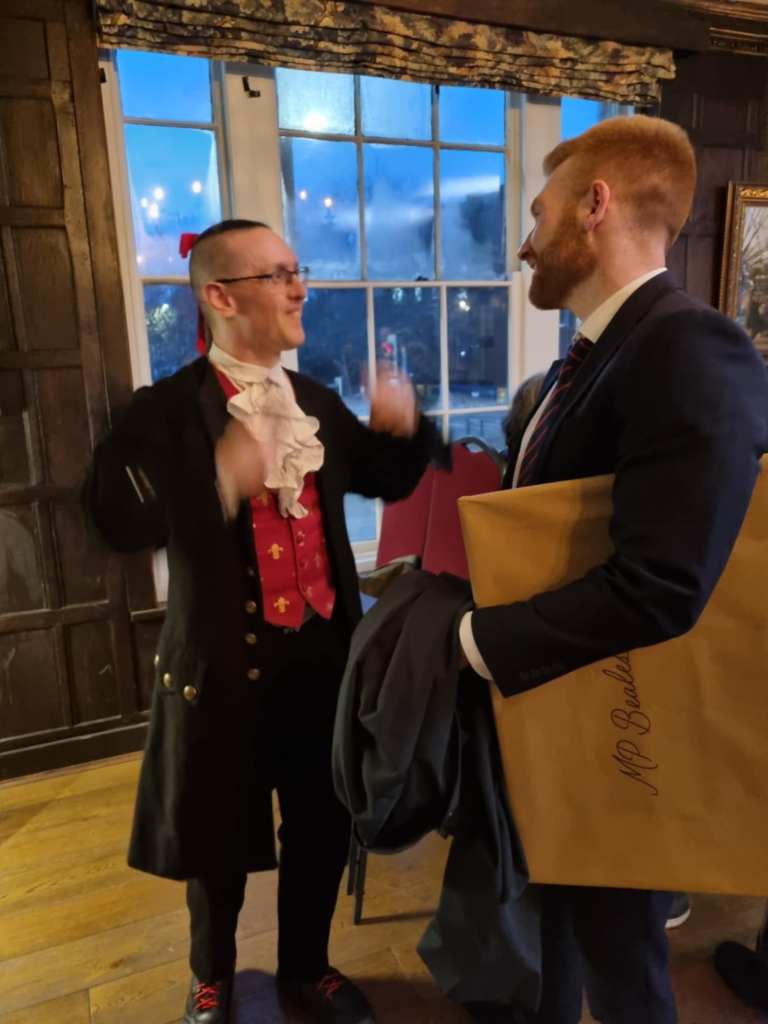
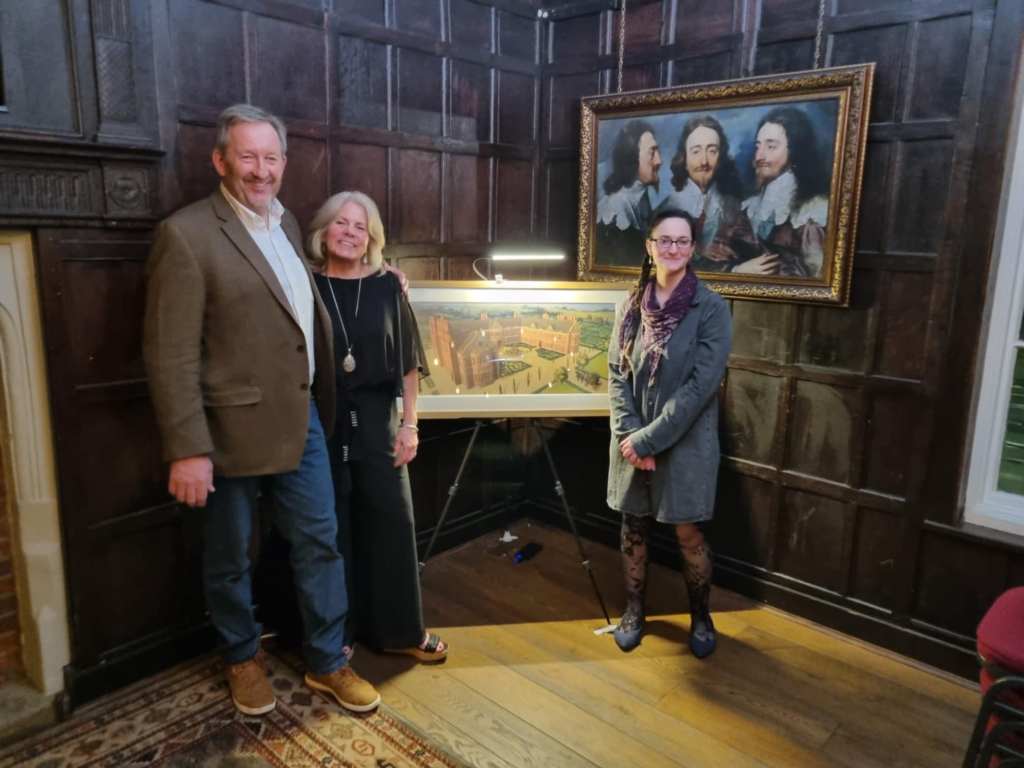
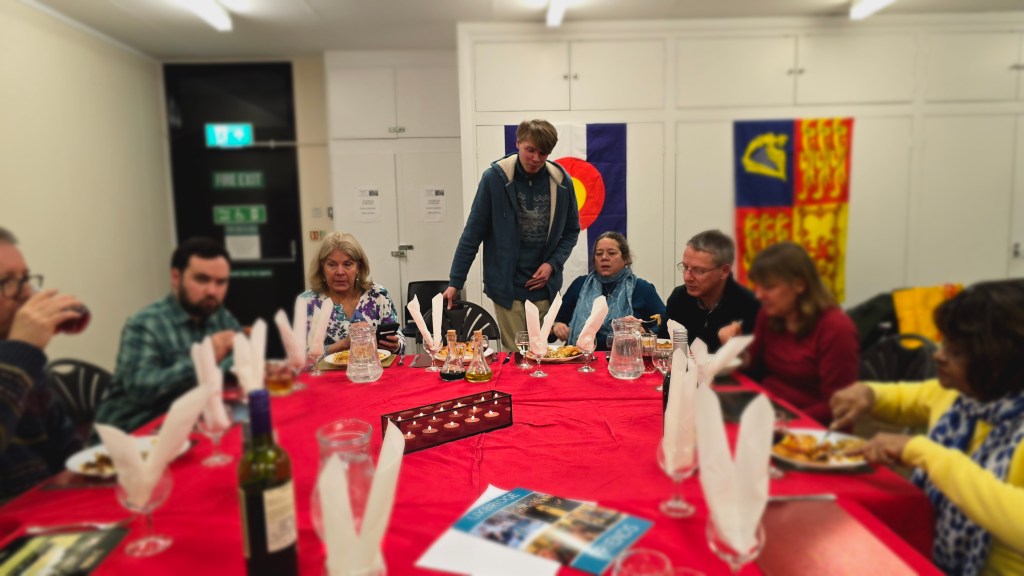
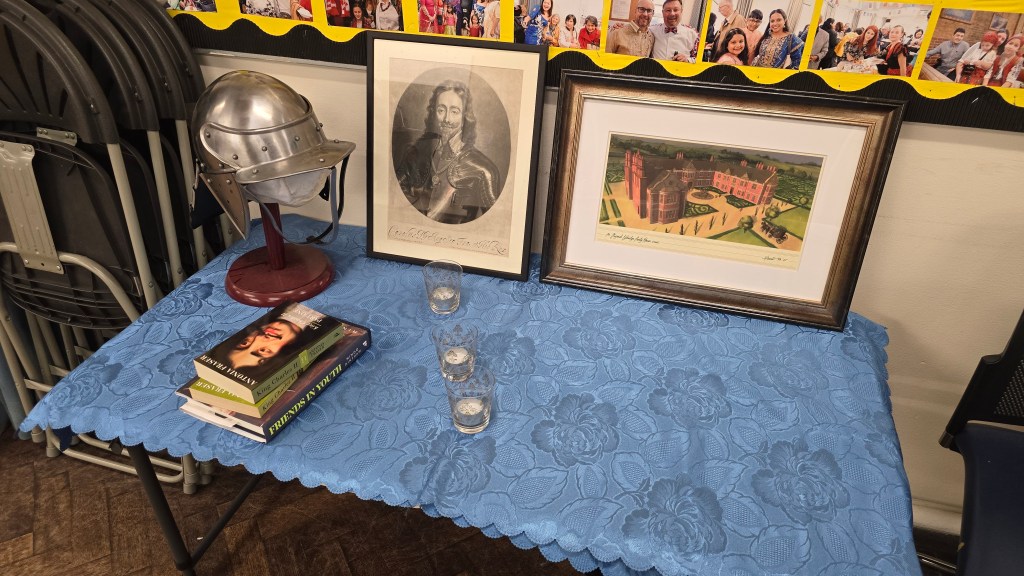
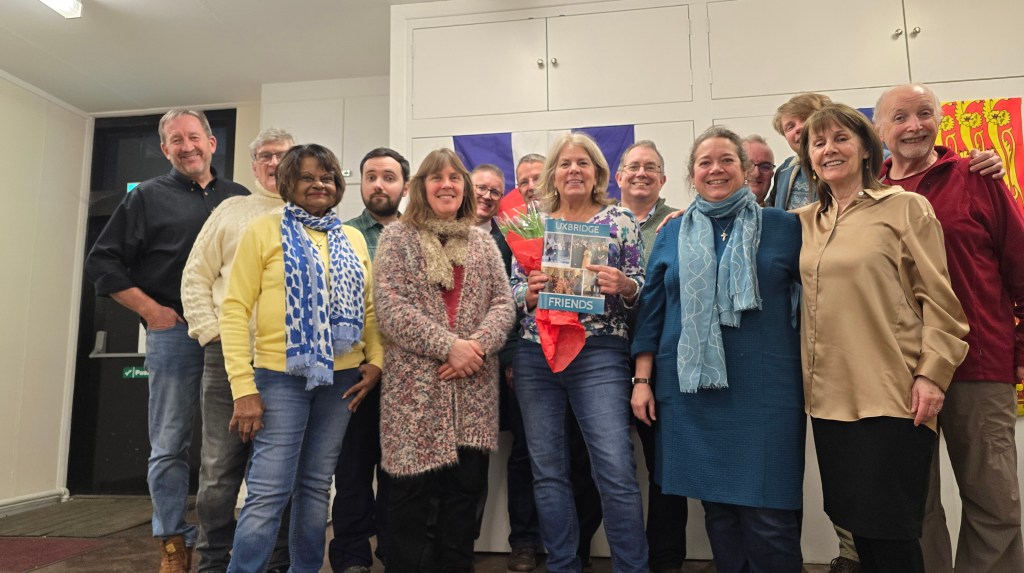
Did it work? Yes, it did (especially on me). It was very well received, and was the perfect table-setting for the unveiling of Misha’s artwork that followed. But you don’t need to take my word for it–the video is below. One last fun fact? Partway through the video, the camera flies through a main window into an interior room to begin the interior “fly through”. That room was the very space the unveiling event was being held in–at the Oxford Road end of the surviving wing.
Enjoy!

Now that we are back in the US, its interesting to realize some of the small things we got used to. For example:
- Large power plugs on appliances. The UK power is twice the US voltage (240v AC) and the plugs are bulkier.
- Power switches on wall outlets. UK power outlets have built-in power switches. Several times, I couldn’t figure out why something didn’t seem to be working only to re-discover that there is a switch on the outlet I need to be sure is “on”.
- Lovely old buildings. We knew we would miss these once we were back in the US…and we do. The oldest european-built structure in Colorado was built in 1859. In England, buildings that old seem to exist in every neighborhood–sprinkled amongst others from the 1600’s.
- Cheaper food. Mary mentioned that overall, food is more expensive in the US. And produce markets are much more common in the UK.
- Food scraps collection (for composting). We got used to setting food scraps aside in special containers to be collected alongside trash and recycling. The UK produces much less trash per person. We may start doing the same here, composting for the garden…
Things we are enjoying now that we are back home:
- Coffee creamer! Flavored coffee creamer isn’t available as a product in the UK. You have to buy “single cream” (that doesn’t reseal well) and vanilla flavoring separately and mix them into your coffee. Oddly, this was something we missed.
- Driving again. It was strange not driving for 6 months, since we decided to “go native” and use the excellent bus/tube/train systems available in the UK (and our bikes). There is something wonderful about the American road trip!
- Tumble dryers. These are rare in the UK. Folks just hang clothes to dry, even (indoors) in the winter. Here in the US, every household has a tumble dryer.
- Sunshine! We didn’t grasp how far North the UK is, and how low in the sky the sun hangs in the winter (when the sky is clear enough to see it). It turns out all of the continental US and 90% of Canada’s population lie south of England. Down here in Colorado, 5 days in 6 are sunny, year round.
- Dramatic weather. There’s something exciting about the big weather we have here in the US (and the long views to enjoy it)…big winter storms spilling over the mountains are beautiful!










 5280 Explorer